Megaphone by Spotify | Email & brand strategy
Auditing and reimagining external communications to represent a unified brand voice.
Leading content design on a team that designed a set of modular email templates to support the creator’s onboarding journey.
The project
Audit, strategize, and roll out a new email communication strategy that supports the user’s onboarding journey and represents a unified brand voice.
Background
Megaphone is a legacy product, so we had to define its brand identity under Spotify. Additionally, email marketing and communications were distributed across teams with minimal guidance or acceptance criteria in place.
Audience
Megaphone is an B2B podcast publishing platforms. Our users are podcasters who have made their craft their livelihoods. This means we’re usually designing for big media networks, like ESPN or Vox.
Audit
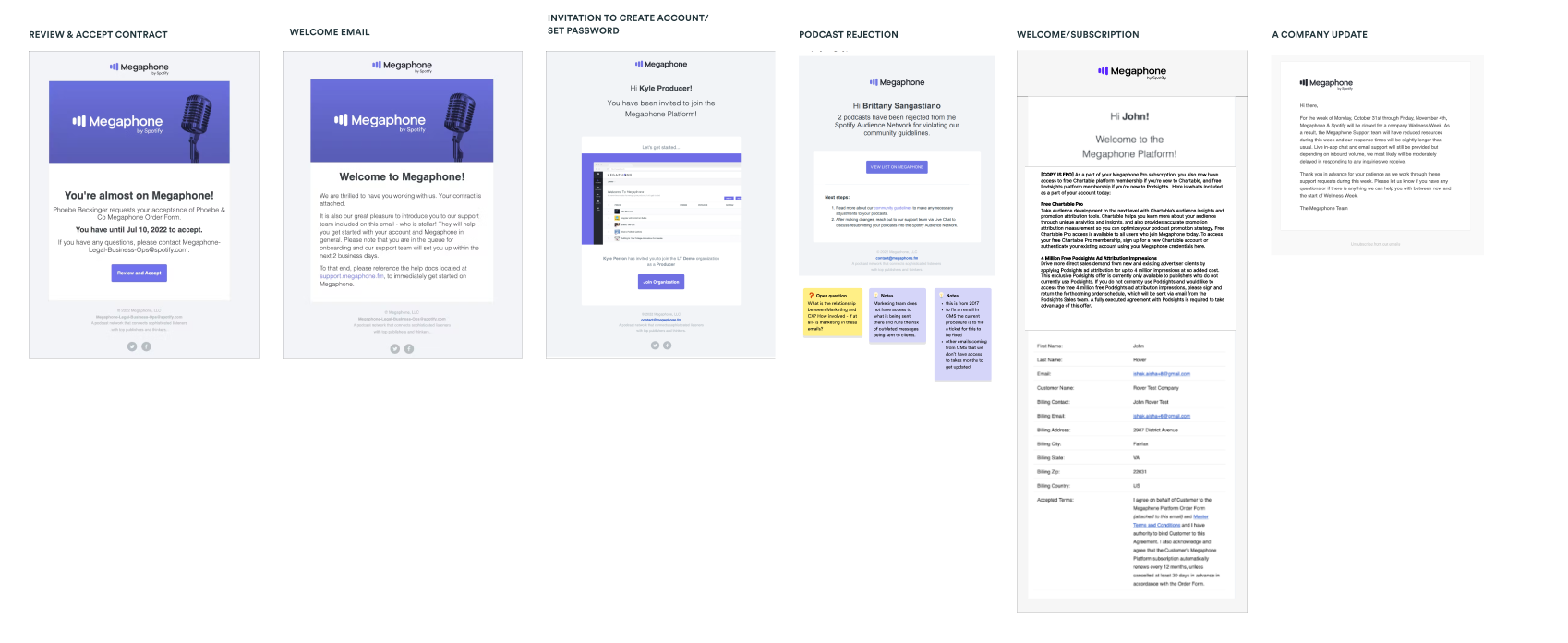
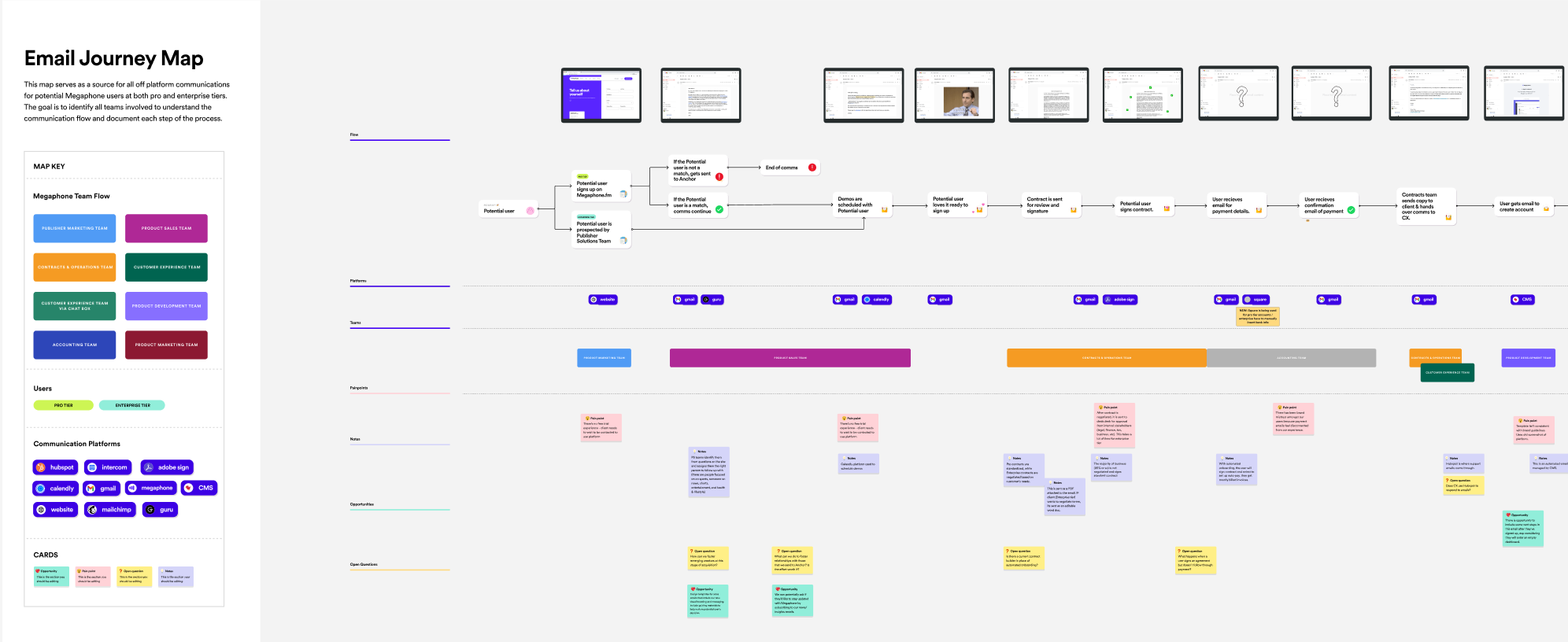
Existing email communications were distributed across both marketing, sales, and support teams — so the first thing my design partner and I did was conduct an audit of existing communications. Then, we mapped the assets against the existing user journey to identify critical touchpoints and highlight any redundancies in communication.
Working with our product manager, we identified which emails were likely to have the most impact. These included onboarding confirmations, newsletter sign ups, and marketing newsletters. We moved forward into ideation with the goal to use these emails as the foundation for a wider, self-serve modular library that marketing and support teams could pull from when drafting new emails and newsletters.
Modular template library
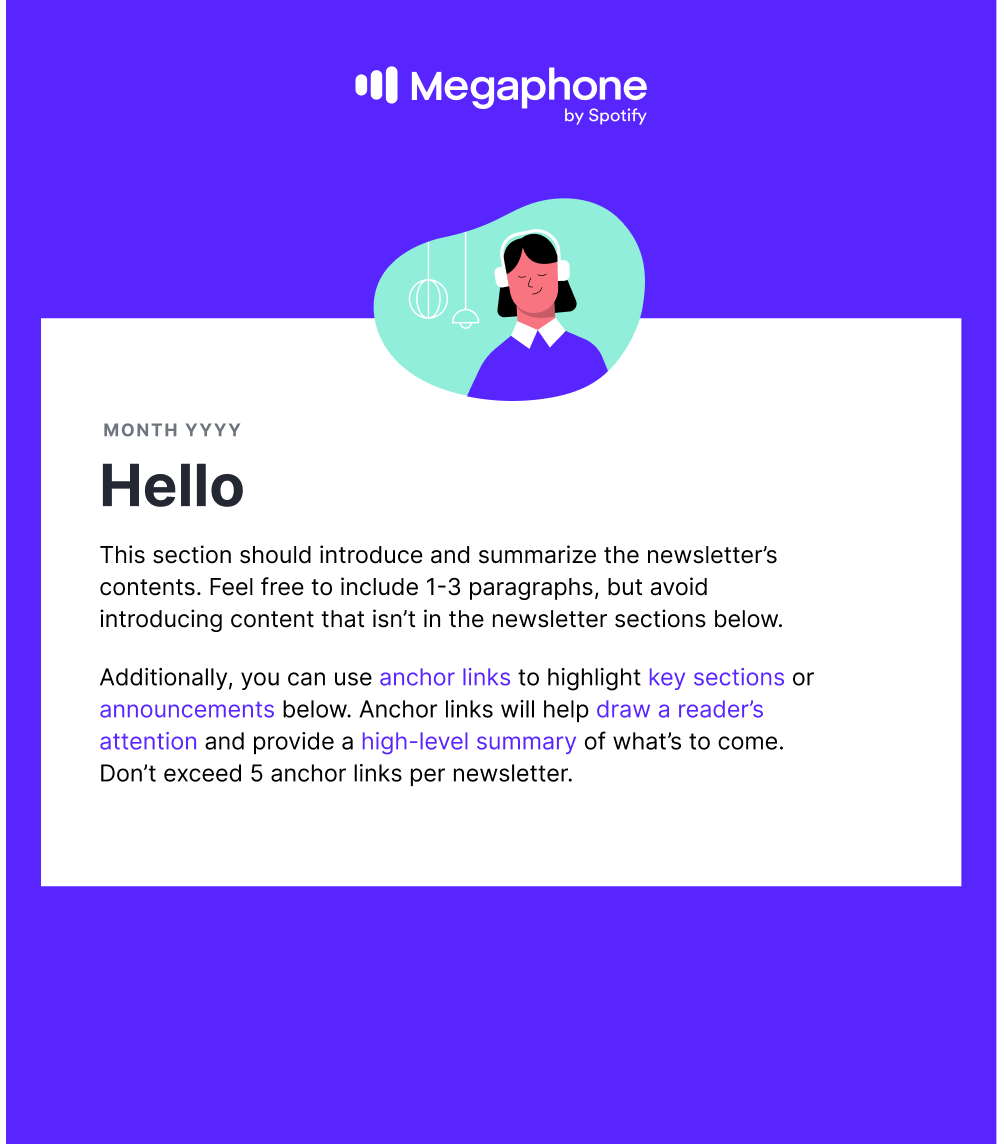
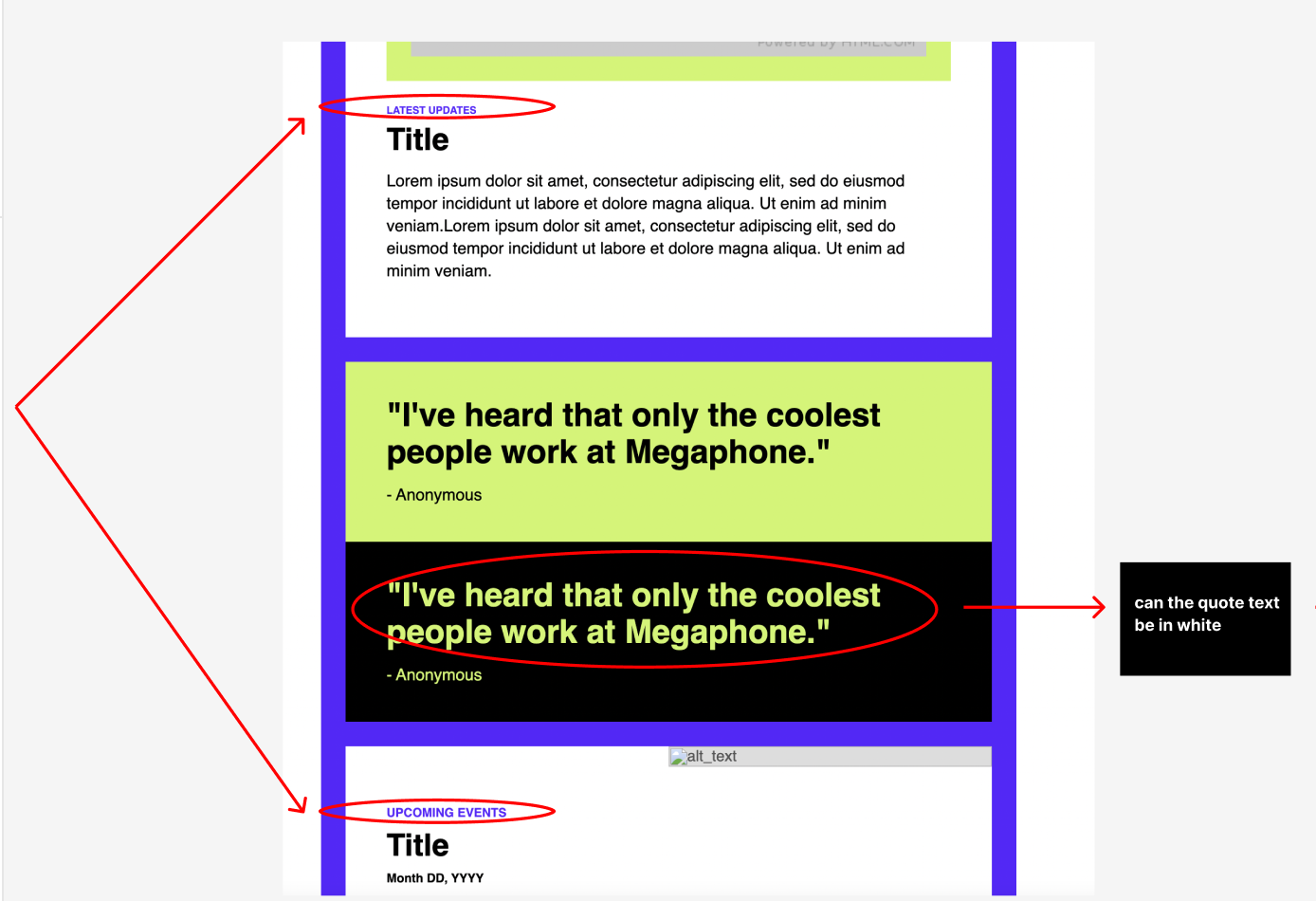
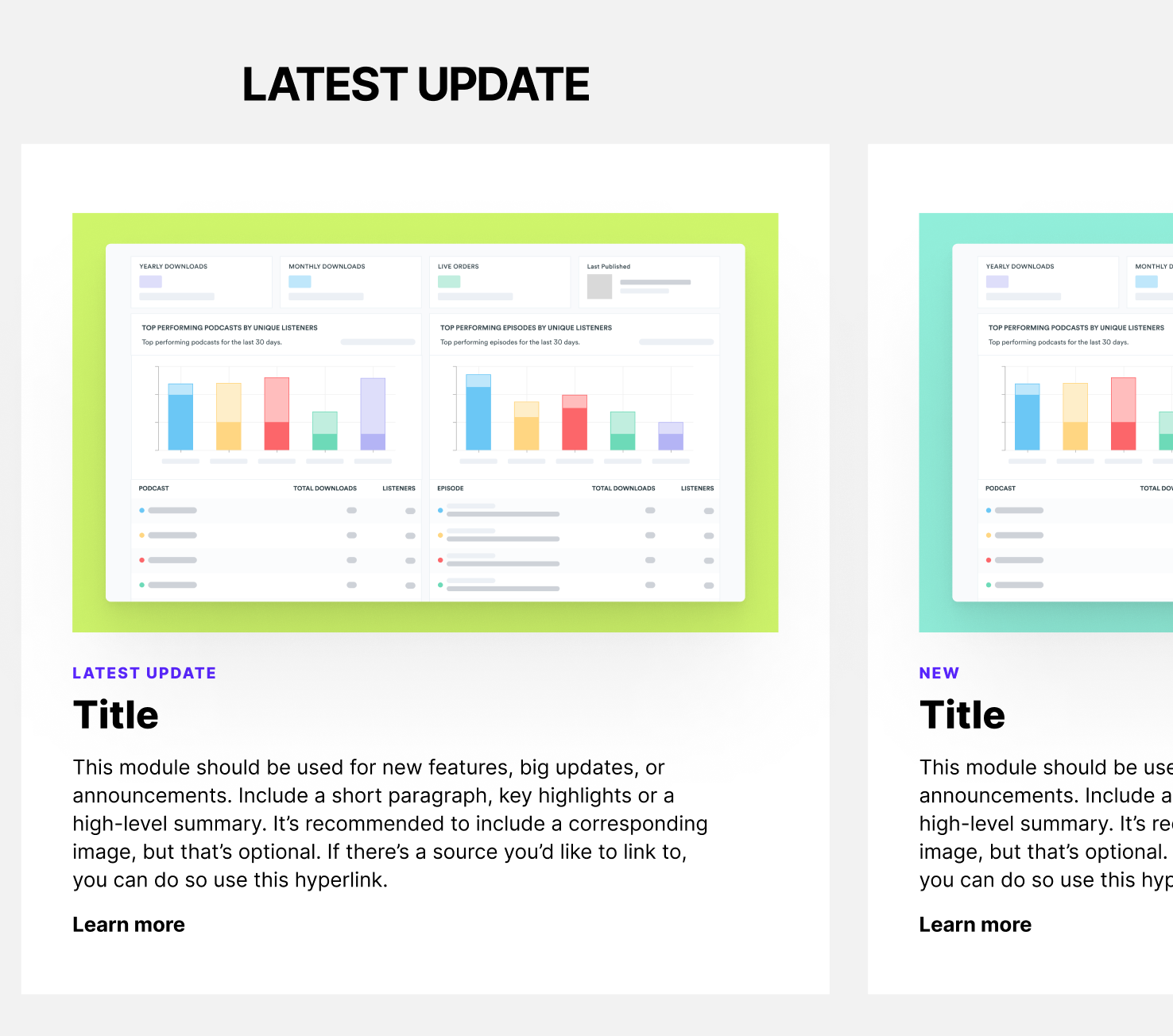
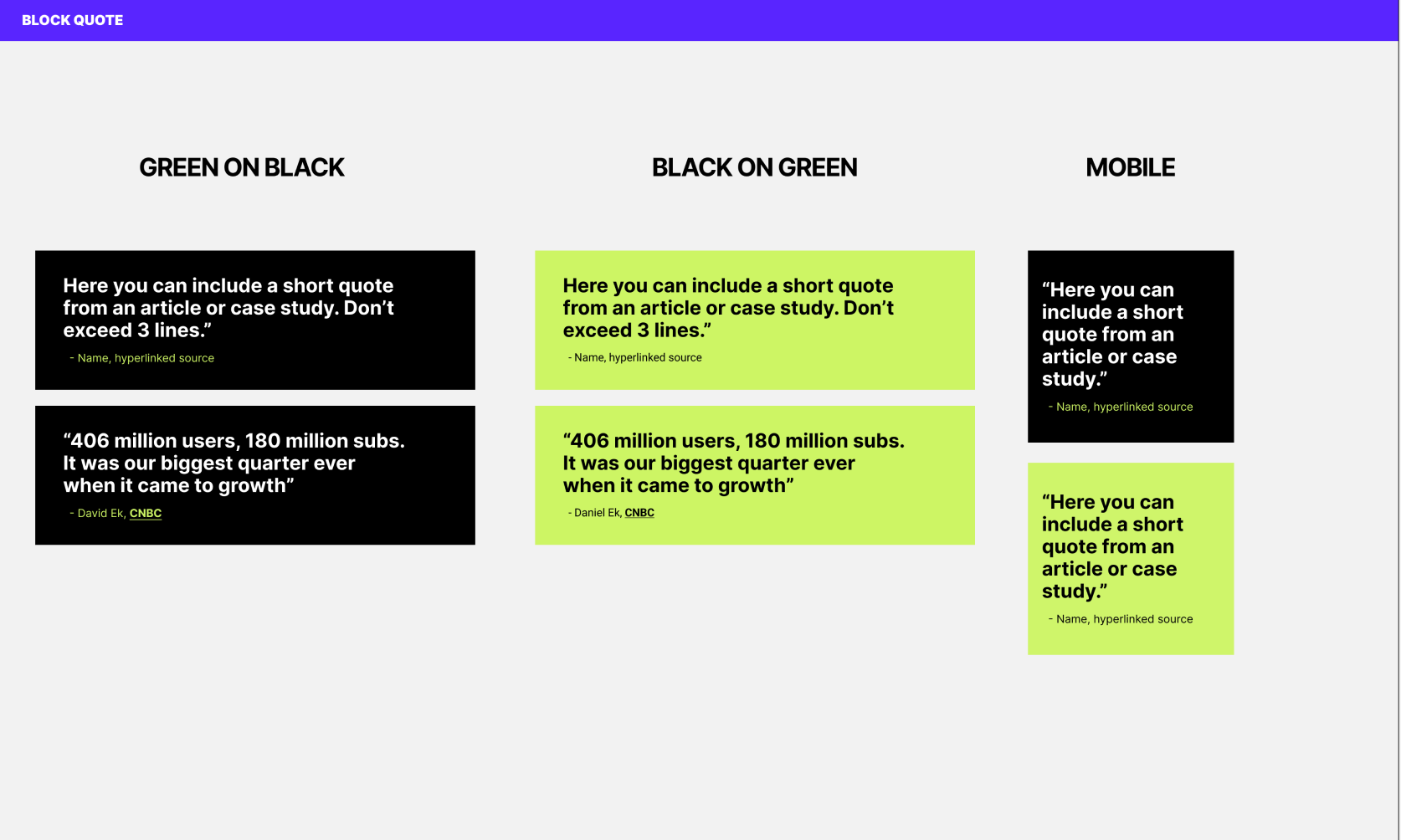
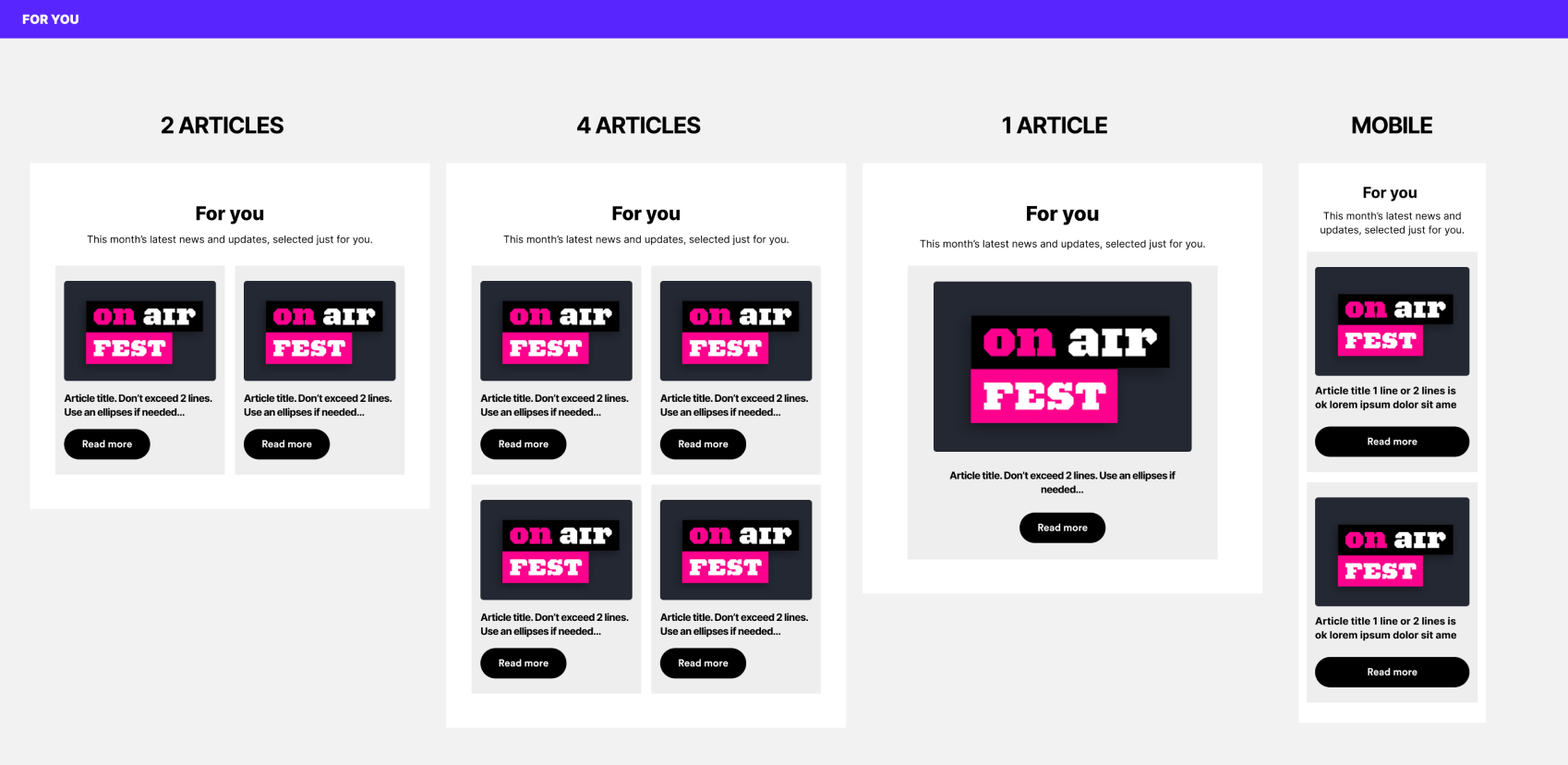
We spent the next 2 sprints identifying what kind of modules we would need to meet the needs of these different emails and iterating on how to create comprehensive and scalable guidelines for use. After reviewing with product, marketing, and engineering — we landed on a set of 6 modules, all of which could be scaled up or down to accommodate the email’s assets.
With this library, it was critical that I embedded as much content guidance within the modules as possible. I wanted to evolve from separating content style guides from design systems, to integrating content guidelines directly within visual designs. This work is not only something I’m proud of, but something that was really well-received by stakeholders and other designers and helped start conversations about how we can continue bridging content and visual design.

Global content strategy
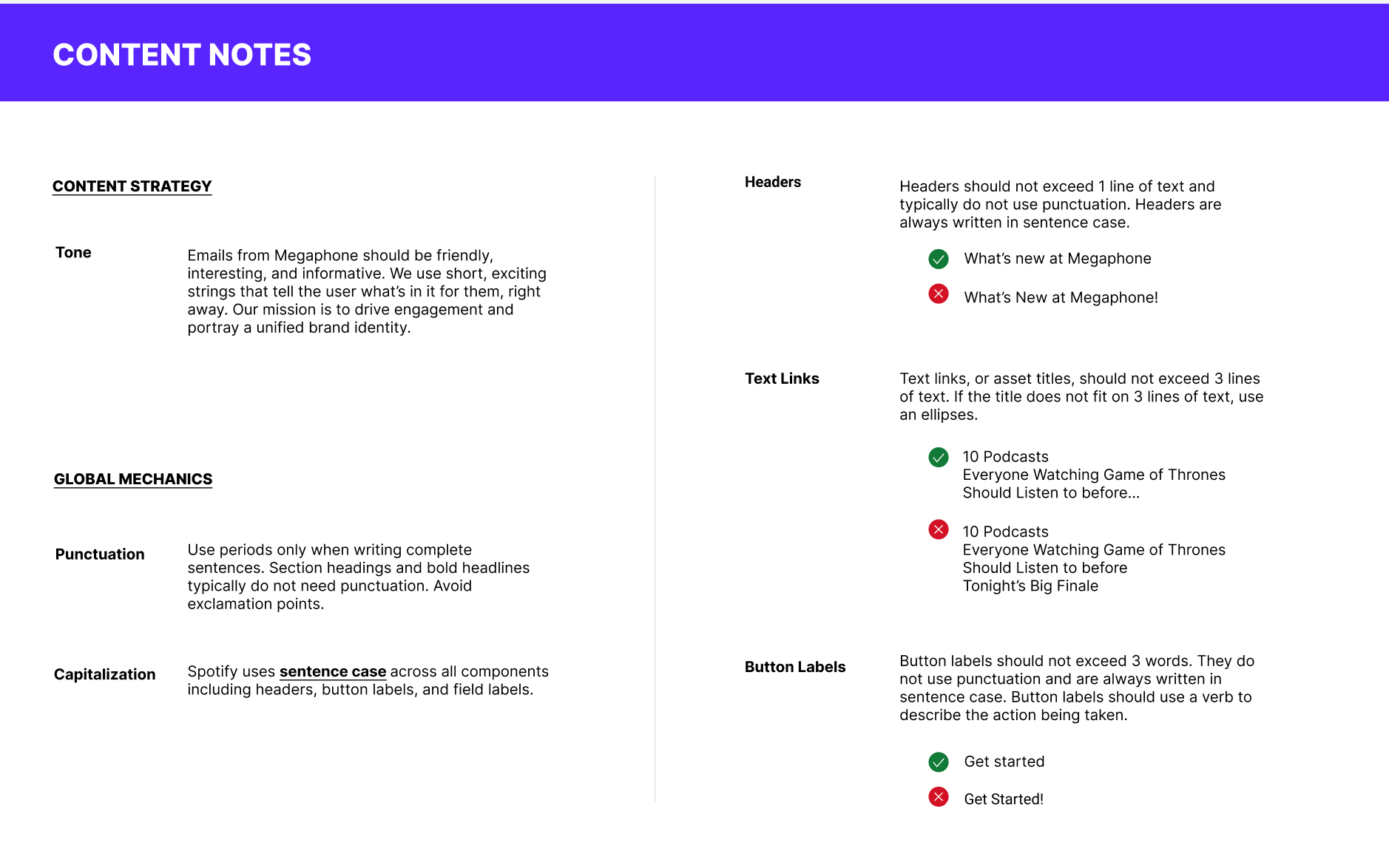
I embedded as much guidance in the modules as possible — but there was still a need for global notes on content strategy since we’d be circulating the templates outside of my design team.
In this file, I documented some of the things that were skimmed over in the modules — like tone, mechanics, and some of the more tricky components. I modeled this style guide after a few of my favorites in the industry, like Mailchimp and Microsoft, and used examples to illustrate key concepts.
Results
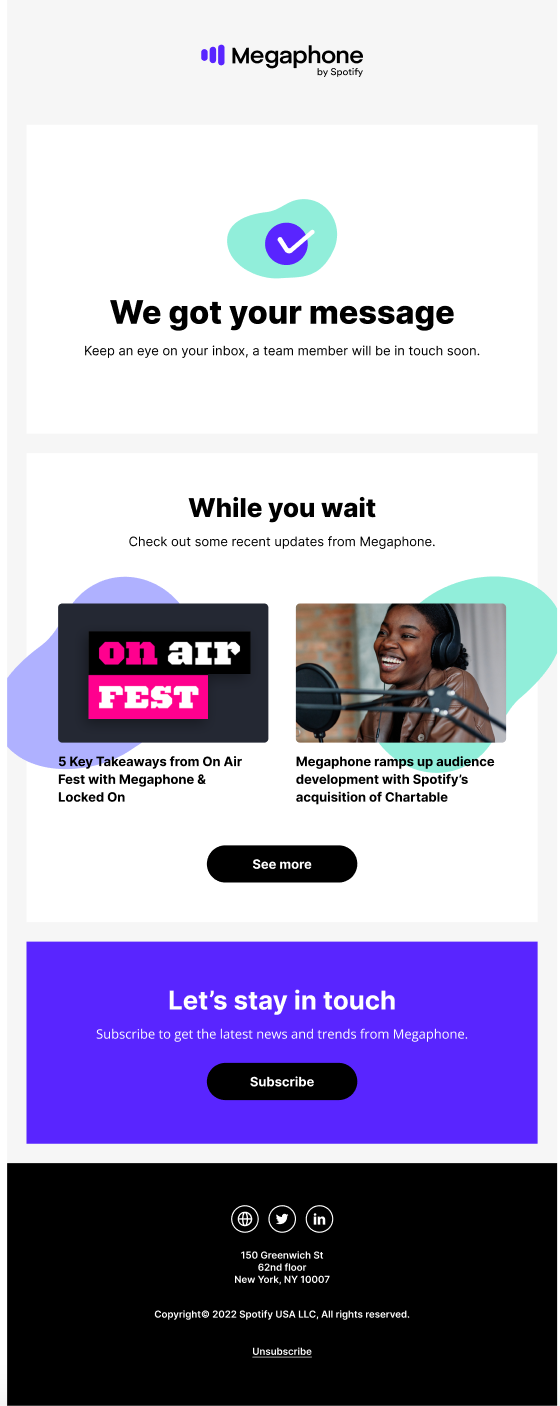
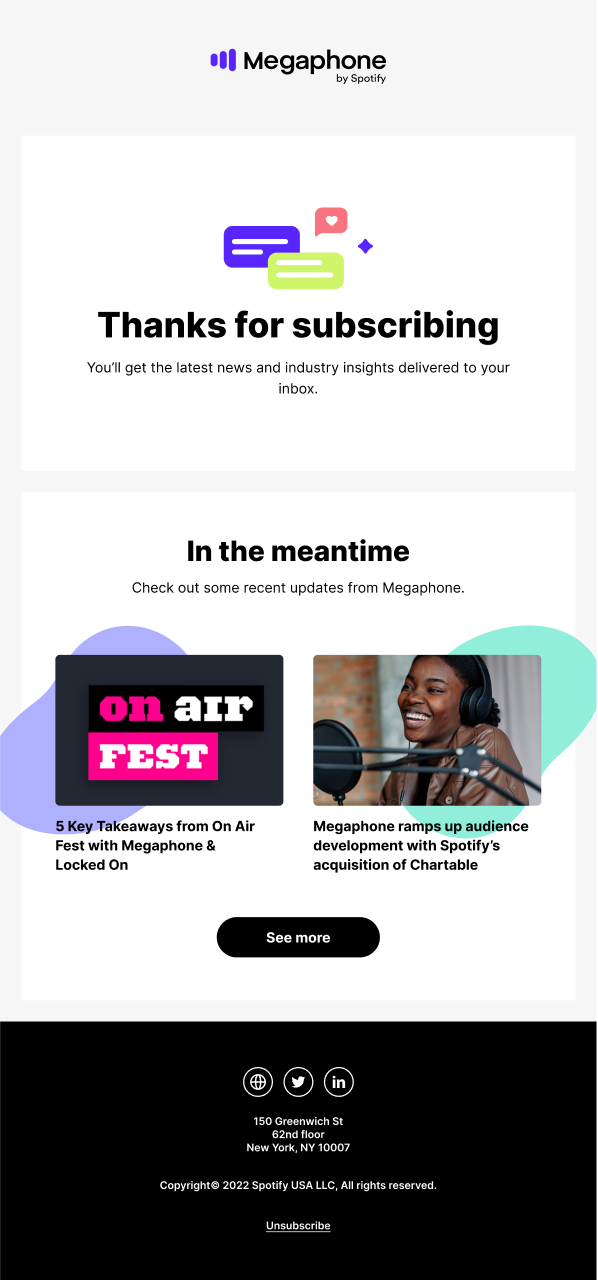
To wrap up this project, my team and I designed a few high-priority emails using the new modular templates and content guidelines. They represent a unified brand while maintaining scalability — and most importantly have driven engagement among users.